DIY Asphalt Repair
Lorem ipsum dolor sit amet, consectetur adipiscing elit, sed do eiusmod tempor incididunt ut labore et dolore magna aliqua.TYPES OF ASPHALT REPAIRS

Asphalt Cracks
Lorem ipsum dolor sit amet, consectetur adipiscing elit

Pothole Repairs
Lorem ipsum dolor sit amet, consectetur adipiscing elit

Dips & Low Spots
Lorem ipsum dolor sit amet, consectetur adipiscing elit

Surface Wear
Lorem ipsum dolor sit amet, consectetur adipiscing elit
DIY ASPHALT REPAIR GUIDES
Lorem ipsum dolor sit amet, consectetur adipiscing elit, sed do eiusmod tempor incididunt ut labore et dolore magna aliqua. Ut enim ad minim veniam, quis nostrud exercitation ullamco laboris nisi ut aliquip ex ea commodo consequat.

Asphalt Crack Repair Guide
Lorem ipsum dolor sit amet, consectetur adipiscing elit, sed do eiusmod tempor incididunt ut labore et dolore magna aliqua.
Asphalt Pothole Repair Guide
Lorem ipsum dolor sit amet, consectetur adipiscing elit, sed do eiusmod tempor incididunt ut labore et dolore magna aliqua.SAKRETE ASPHALT REPAIR PRODUCTS
Lorem ipsum dolor sit amet, consectetur adipiscing elit, sed do eiusmod tempor incididunt ut labore et dolore magna aliqua. Ut enim ad minim veniam, quis nostrud exercitation ullamco laboris nisi ut aliquip ex ea commodo consequat.

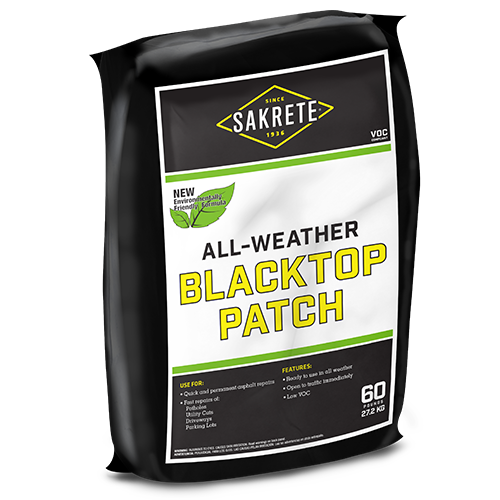
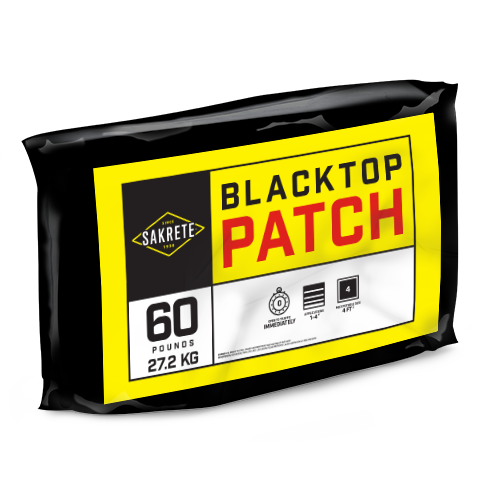
All-Weather Blacktop Patch
Asphalt Repair
Application Depth:
1" - 4" not to exceed 2'x2' (4 ft2) overall
DIY ASPHALT REPAIR TIPS
Lorem ipsum dolor sit amet, consectetur adipiscing elit, sed do eiusmod tempor incididunt ut labore et dolore magna aliqua. Ut enim ad minim veniam, quis nostrud exercitation ullamco laboris nisi ut aliquip ex ea commodo consequat.
English Video
Video en Español
ASPHALT REPAIR FAQS
Every concrete pour is different and it is important to reach out to a professional for their services or guidance through the process. An invaluable tool we offer free of charge at Sakrete is our Slab Pour Calculator (https://www.sakrete.com/concrete-calculator/slab-pour/). Use this calculator to properly calculate your next pour and relish in your success once the job is complete.
A few tips to prevent concrete from cracking include allowing concrete to cure correctly, ensuring the concrete has proper reinforcement, placing control joints where needed, choosing the correct mix, and ensuring weather conditions are optimal for good results.
Certainly! There are various ways concrete can be cosmetically enhanced. Those ways include adding concrete color (see our Sakrete cement colors section), adding a sealer (see our Sakrete Cure ‘N Seal) to reduce surface cracking and enhance appearance, and more.
Weather significantly impacts a concrete pour as it affects both initial placement and long-term durability. Four different weather coniditons that many contractors deal with when pouring concrete include hot weather, cold weather, wind, and rain and moisture. Its vital to do research or ask an expert on how to deal with the varying conditions you may face out on the job.
Concrete PSI (pounds per square inch) measures the compressive strength of concrete. It specifies the amount of force, in pounds per square inch, that concrete can withstand before it breaks or fails. The higher the PSI number, the stronger the concrete. Different construction projects require different concrete PSI and it’s important to ensure you pick the right strength for the job.
A product composed of masonry cement (or portland cement and lime) and mason sand. When water is mixed in with this product, the cement is activated. Whereas concrete can stand alone, mortar is used to hold together bricks, stones or other building materials.
A bag of concrete mix includes all of the components and only needs water to work effectively. A dry bag of cement is missing other components, like fine/coarse aggregates and water, to be used properly.
Concrete is a mixture of portland cement, aggregates (like sands and stones), lime, and water.
Often, the terms “cement,” “concrete” and “mortar” are used almost interchangeably. The terms refer to materials that have three different purposes:
Concrete: A product composed of cement, sand and gravel or other coarse aggregate. When water is mixed in with this product, it activates the cement, which is the element responsible for binding the mix together to form one solid object.
Cement: The binding element in both concrete and mortar.
Mortar: A product composed of masonry cement (or portland cement and lime) and mason sand. When water is mixed in with this product, the cement is activated. Whereas concrete can stand alone, mortar is used to hold together bricks, stones or other building materials.
Curing concrete is the process that occurs immediately after the concrete is placed and finished. It involves maintaining proper temperature conditions and specific moisture for extended periods of time to ensure the concrete develops its desired properties. Concrete needs proper curing to develop strength, durability and minimize cracking. Correct curing ensures that concrete achieves its full strength potential and serves its intended purpose effectively.